
THE IMPACT OF ELEVATED HOUSING PLATFORMS SYSTEM ON PERFORMANCE AND SPACE UTILIZATION OF GROWING PIGS

BY
ALEXANDER IKECHUKWU EBENEZER
Abstract
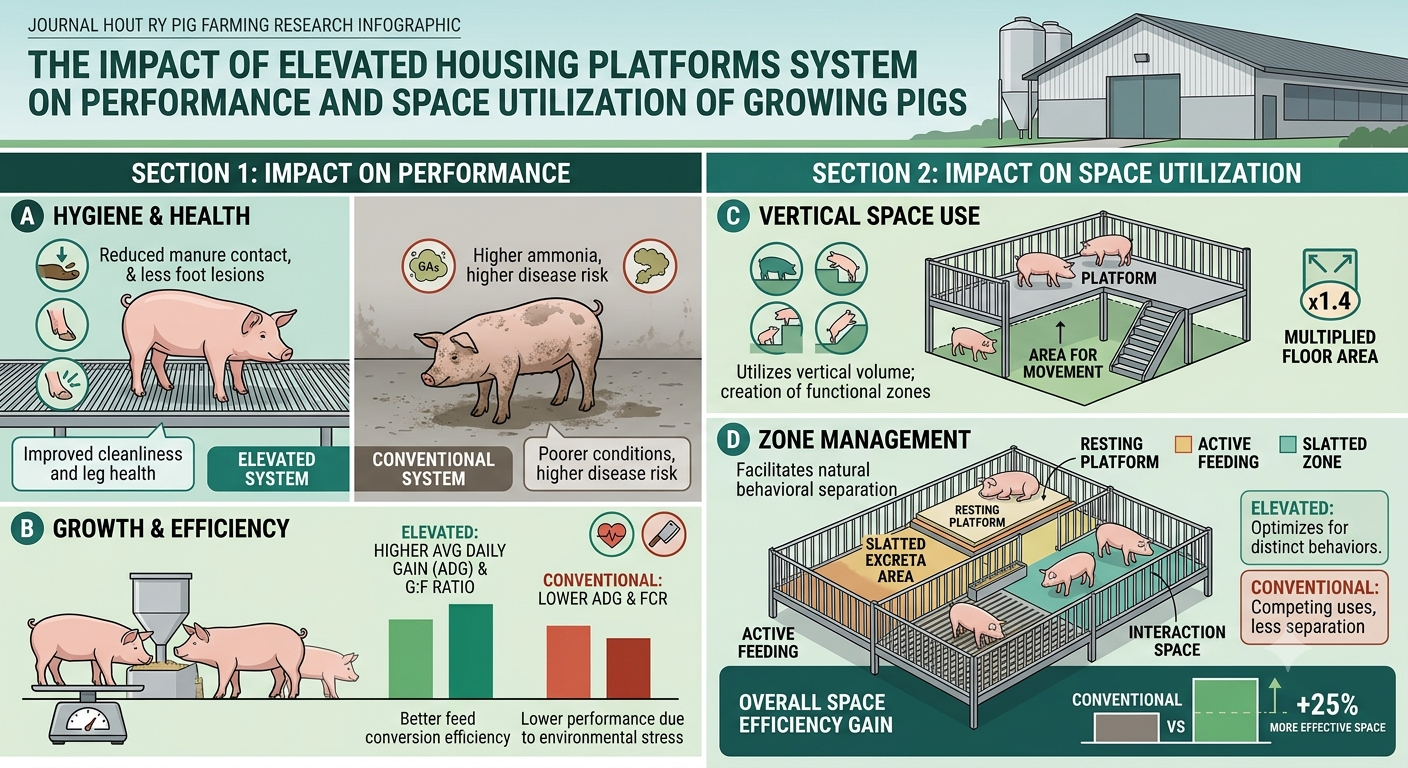
Pig production is a cornerstone of global agriculture, providing food security, employment, and economic stability. Housing systems are central to productivity, influencing animal welfare, growth performance, and farm profitability. Conventional floor systems, though widely adopted, often compromise welfare due to overcrowding, poor hygiene, and limited space utilization. Elevated housing platforms have emerged as an innovative alternative, offering additional usable space, improved hygiene, and enhanced welfare outcomes. This study investigates the impact of elevated housing platforms on the performance and space utilization of growing pigs, focusing on growth rates, feed efficiency, stress response, and skin lesion scores. Drawing on empirical evidence and comparative studies, the paper highlights how elevated systems reduce aggression, improve resting behavior, and optimize three dimensional space. Design considerations such as platform height, material selection, ventilation, and manure management are also examined. Findings suggest that elevated housing systems enhance feed conversion, reduce stress indicators, and lower incidence of skin lesions compared to conventional systems. While challenges such as higher initial investment and management complexity exist, the long term benefits in productivity, welfare, and sustainability outweigh these concerns. The study concludes that elevated housing platforms represent a viable strategy for modern pig production, balancing economic efficiency with welfare standards. Recommendations emphasize farmer adoption, supportive policy frameworks, and further research into large scale applications.
Keywords: Elevated housing platforms; Pig welfare; Space utilization; Growth performance; Sustainable pig production
Download Journal Here!