

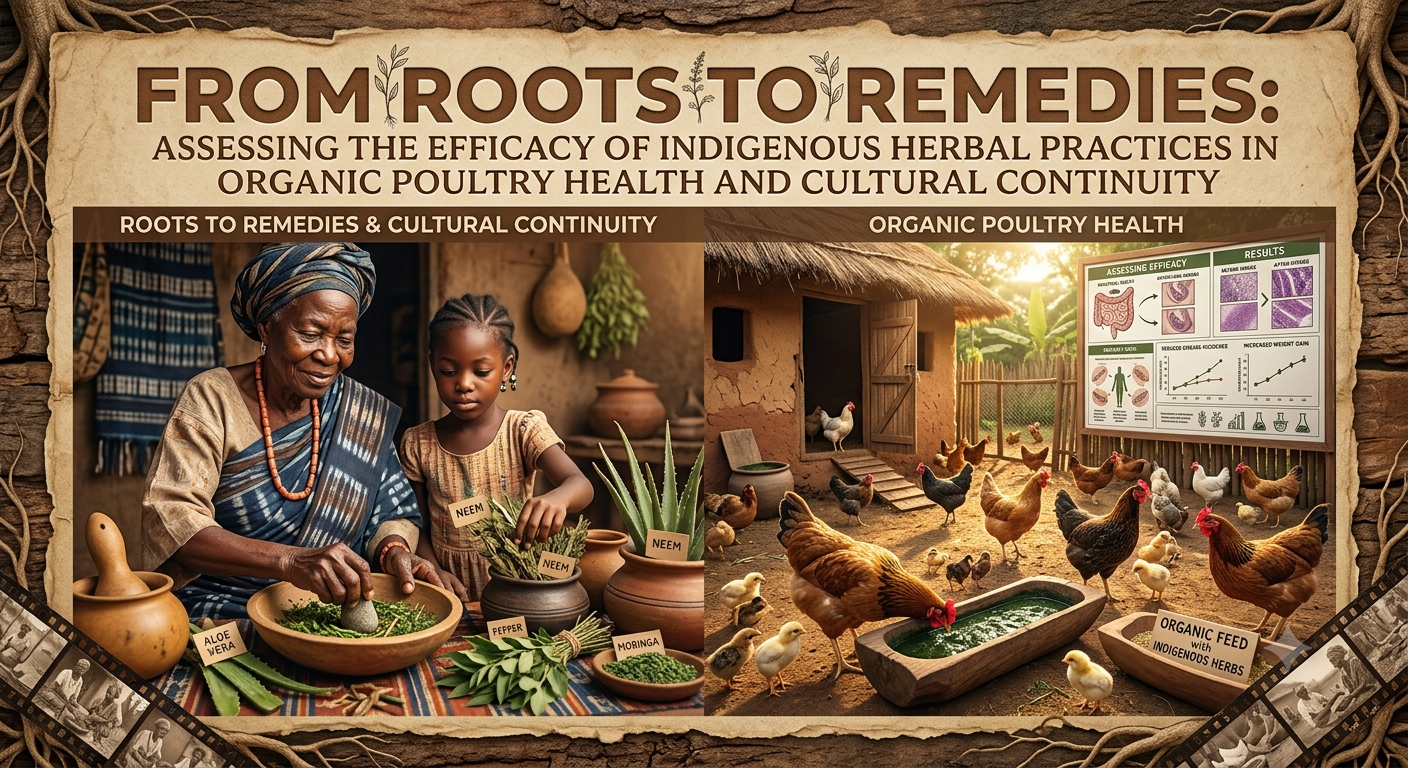
FROM ROOTS TO REMEDIES: ASSESSING THE EFFICACY OF INDIGENOUS HERBAL PRACTICES IN ORGANIC POULTRY HEALTH AND CULTURAL CONTINUITY.

BY
Evelyn Chinenye Eze
08039148534
Abstract
Native herbal treatments have gained attention again as sustainable substitutes for synthetic veterinary medications due to the growing interest in organic chicken production around the world. Plant-based treatments made from locally accessible herbs, fruits, and leaves have long been used by farmers in Nigeria and other African countries to improve the health of chickens, increase egg output, and lower mortality rates. Examining the effectiveness of indigenous herbal practices in organic poultry health and cultural continuity is the title of this study to investigates the effectiveness of selected indigenous herbs in maintaining poultry health while preserving cultural knowledge systems. Twenty local chicken farmers who actively use herbal-based poultry treatment from Kogi, Enugu, and Delta States participated in in-depth interviews, focus groups, and observations as part of a qualitative study strategy. Tagiri (Christmas melon), Kalanchoe pinnata (wonder leaf), pawpaw leaves and seed, beetroot, rodo pepper, beetroot, quaver leaf, cassava leaf, rice water, bay leaves, soursop leaves, aloe vera, ginger, garlic, neem leaves, and turmeric are among the important herbs that were analyzed. According to research, these herbs are frequently used to prevent and treat a variety of chicken illnesses, including growth retardation, respiratory infections, intestinal worms, Newcastle disease, coccidiosis, and poor egg production. Herbal medicines are affordable, locally available, eco-friendly, and culturally meaningful, according to farmers. Their use also promotes knowledge transfer between generations, which helps maintain cultural continuity.
Keywords: Indigenous herbs, poultry health, organic farming, cultural continuity, sustainable agriculture, Nigeria.
Download journal here!