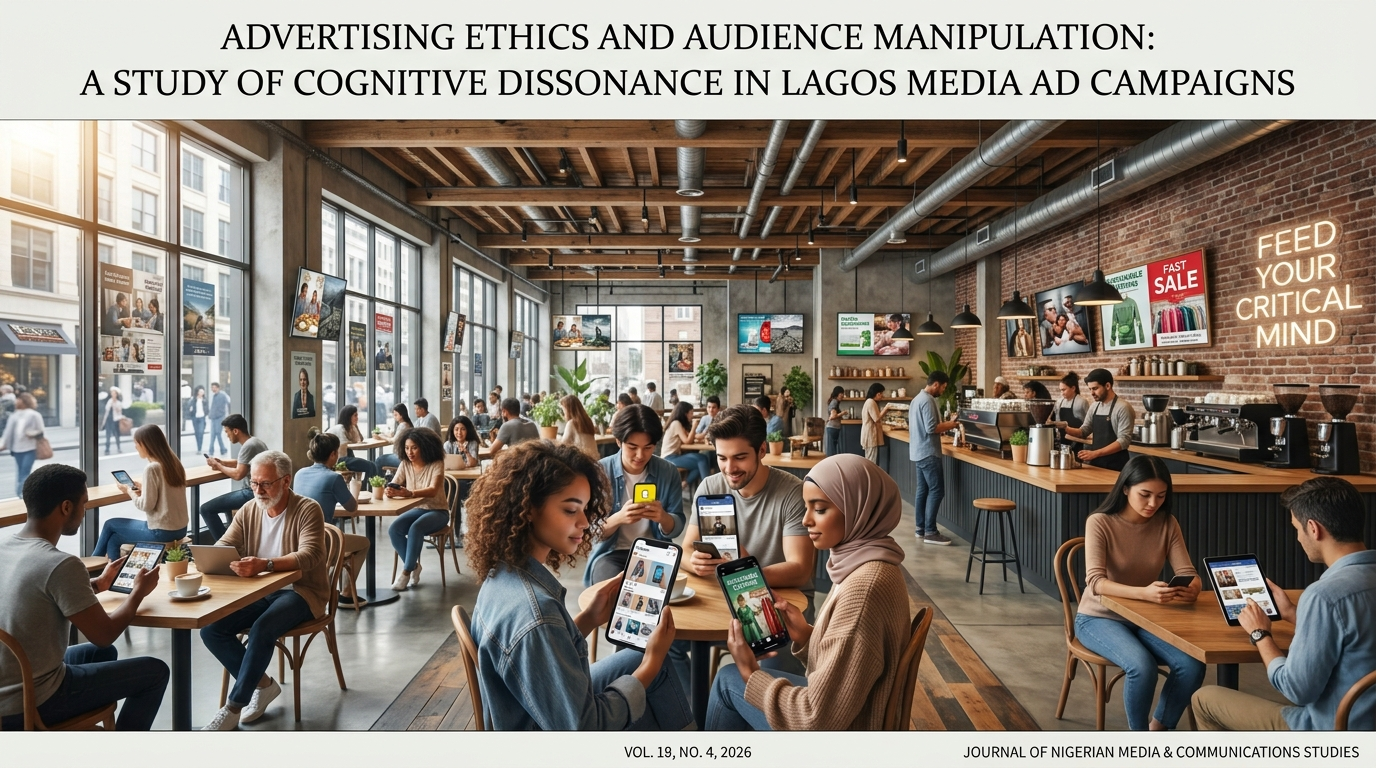
ADVERTISINGETHICSANDAUDIENCEMANIPULATION:ASTUDY OF COGNITIVE DISSONANCE IN LAGOS MEDIA AD CAMPAIGNS

BY
IBUKUNOLUWA ADESOYE
ABSTRACT
Advertisement is a tool to help the public get to know more product, service and information that can make life easier for them, however, it can also be a tool of destruction if not well regulated. Advertising in Lagos, Nigeria, has grown into a dynamic, competitive, and highly persuasive industry. While its primary purpose is to inform and persuade, ethical dilemmas arise when manipulation overshadows transparency. This study investigates advertising ethics and audience manipulation in Lagos media campaigns through the lens of cognitive dissonance theory (Festinger, 1957). Using a mixed-method approach survey (Quantitative & qualitative data collection method), the study explores how manipulative strategies in Lagos advertising generate psychological discomfort among consumers, how audiences reconcile dissonance, and whether ethical concerns influence purchasing behavior. Findings reveal that aspirational and emotional appeals dominate Lagos advertising, often leading consumers to experience regret or rationalization when product outcomes fall short of advertised promises (Ogedebe, 2018; Ajiboye & Olatunji, 2020). However, it does not in any way have advert or long–term consequences/effect on consumers. ARCON (Advertising Regulator Council of Nigeria) which is one of the advertising Practitioners Council of Nigeria recommends stronger ethical regulations, heightened consumer awareness, and adoption of transparent advertising practices (ARCON, 2022). The implications extend to policy, marketing education, and consumer protection frameworks in Nigeria.
Key Words: Advertising ethics, cognitive dissonance, consumer behavior, persuasion, audience manipulation, Lagos media.
Download Journal Here!