

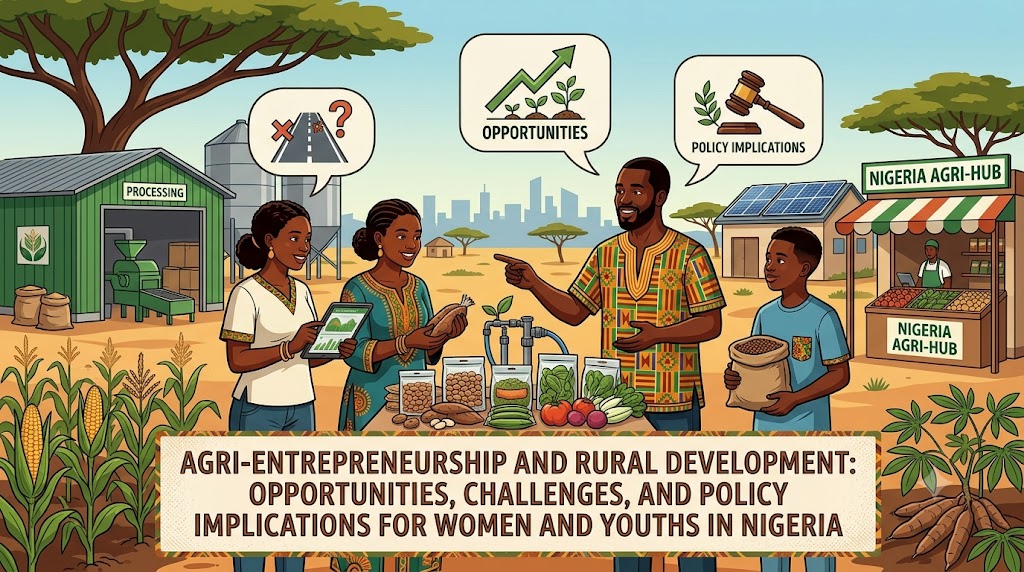
AGRI-ENTREPRENEURSHIP AND RURAL DEVELOPMENT: OPPORTUNITIES, CHALLENGES, AND POLICY IMPLICATIONS FOR WOMEN AND YOUTHS IN NIGERIA

BY :
OGBONNA, OGADINMA EZENWA
+2348037102874
Abstract
Agriculture contributes about 25% to Nigeria’s GDP and engages nearly 70% of the rural labour force, yet rural poverty remains high at 52%, disproportionately affecting women and youths. Women provide 60% of agricultural labour but control less than 15% of productive land, while youths (15–34 years) represent 64% of the population but face 42% unemployment. These disparities perpetuate poverty, low productivity, and limited social mobility. Agri-entrepreneurship—defined as applying innovation, risk-taking, and resource management across production, processing, and marketing—has emerged as a pathway for rural transformation, food security, and inclusive growth aligned with SDG-8 (Sustainable development goals number 8 of the United Nations) which Promote inclusive and sustainable economic growth, employment and decent work for all.
Federal initiatives (e.g., Anchor Borrowers, N-Power Agro) and donor programmes (e.g., IFAD-VCDP, AfDB ENABLE-Youth) have sought to integrate women and youths into agricultural enterprises. However, most ventures remain subsistence-oriented and under-capitalized, with limited evidence on effective strategies and demographic-specific challenges. This study investigated current strategies, implementation barriers, and opportunities for sustainable agri-entrepreneurship among women and youths in rural Nigeria. It is hoped that the findings and recommendations will inform policies and interventions that enhance inclusiveness and promote the transition from subsistence farming to viable agri-enterprises.
Keywords: Agri-entrepreneurship, rural development, women, youths, poverty reduction, Nigeria, SDG-8
Download the journal below